By panipopos

Saturday, April 2, 2011


Monday, March 7, 2011
Fa'ausi - Coconut caramel smothered fa'apapa
By admin

"Oh, since when did you start eating fa'ausi in the morning?" I asked him.
"Oi, se...The other day this kid came around selling fa'ausi and I felt sorry for him so I bought a package. He's been coming around ever since." Dad replied."Since when?" I asked again.
"Oh, maybe a week now", he admitted, with a smug, self-satisfied grin on his face, much like a cat that's just swallowed the family goldfish.
See the title picture up above? Behind 'Panipopos Kitchen'? The far left photo is what my father was eating that morning - pumpkin fa'ausi.
One taste of this, and you might get ideas about eating in secret too.
One taste of this, and you might get ideas about eating in secret too.

The fa'ausi sauce is so simple that you can make it while your fa'apapa are baking, and then leave it to cool. By the time you've cut up your fa'apapa, your fa'ausi sauce will be ready to pour over it.

Fa'ausi (serves 4)
2 fa'apapa (coconut or pumpkin)
1 cup (200g) sugar
¼ cup (60ml) water
1 can (400ml) coconut milk
2 fa'apapa (coconut or pumpkin)
1 cup (200g) sugar
¼ cup (60ml) water
1 can (400ml) coconut milk
Make sure your fa'apapa
has cooled to room temperature. Then cut into cubes (½-1 inch squares) and set aside in a bowl.
Put the sugar and water
in a heavy-based saucepan and boil over medium high heat, stirring
occasionally, until the sugar caramelises to a dark golden brown.
Immediately
add the coconut milk, being careful to stand back a little because the sauce
will bubble up vigourously. Be careful not to burn your hand on the steam that
rises up either. Once the mixture has settled, stir the sauce well until
well-combined. Turn off the heat and leave the caramel to cool. (See the puligi recipe for
things that can go wrong while you're making coconut caramel).
Pour the coconut caramel over the
fa'apapa and mix well to cover all surfaces of the cubes. Leave for at least an
hour (preferably longer) for the sauce to soak into the fa'apapa.
Serve as a dessert or
snack. Keep leftovers in the refrigerator and gently reheat to serve.
Sunday, March 6, 2011
Monday, February 28, 2011
Fa'apapa - Baked pumpkin bread
By panipopos
Traditionally, fa'apapa are wrapped in leaves and thrown in the umu along with everything else. In the modern kitchen, some people use well-greased aluminium foil, which allows the fa'apapa to steam/bake just like it would in an umu. However, I prefer to use baking paper because it results in a firmer, evenly browned crust, and I don't have to peel off bits of foil where it sticks to the fa'apapa.

Fa'apapa can be made with coconut, pumpkin, taro, and banana, but there might be other kinds out there that I haven't tasted. The following variation is one of my favorites.

Traditionally, fa'apapa are wrapped in leaves and thrown in the umu along with everything else. In the modern kitchen, some people use well-greased aluminium foil, which allows the fa'apapa to steam/bake just like it would in an umu. However, I prefer to use baking paper because it results in a firmer, evenly browned crust, and I don't have to peel off bits of foil where it sticks to the fa'apapa.
When you're making fa'apapa, it's best to have your coconut milk at liquid temperature. If it's solidified, it makes it harder to mix in with the flour and you might end up with tough fa'apapa. Simply put your coconut milk in the microwave for a few seconds to melt it into its liquid state, but be careful not to heat it. As always, you're going to get a much richer flavour from fresh coconut milk versus the canned stuff.
Oh and just for the record, fa'apapa does not mean bread. To fa'apapa something is to flatten it. In cooking, it means to wrap something into flat parcels and bake in an umu (Samoan oven). Although I have absolutely no proof of it, my theory is that the verb fa'apapa was originally applied to this bread because of its form and cooking method, and over time fa'apapa became the general term for this kind of baked good.
Fa'apapa can be made with coconut, pumpkin, taro, and banana, but there might be other kinds out there that I haven't tasted. The following variation is one of my favorites.
Sunday, February 27, 2011
Fa'apapa - Baked coconut bread
By panipopos
So the other day, my mother called me "old school".
She didn't use those exact words but the implication was clear. I've been away too long.
How did this happen?
Well, I was telling her how I was making fa'apapa, the way we used to have it when I was little. Fa'apapa in those days were these heavy, thick, dense coconut slabs that you could break your teeth on. An old Samoan woman could keep this kind of fa'apapa in her bag and nibble a lump off while waiting for the bus, sitting in church, in the doctor's waiting room. And the fa'apapa also doubled as a weapon in case she got mugged. One hit, and the guy would be out like a light.

So I was telling my mother how I had succeeded in recreating the same kind of hard crunchy crust around a dense coconut texture, weighing the requisite one pound, and the woman says "Oh, we don't make them like that anymore".
"What? What do you mean?" I ask her.
"Yeah, these days, we like lighter, fluffier fa'apapa." my mother replies.
"Huh? What are you talking about, 'lighter' 'fluffier'? They're supposed to be bricks of coconut right?"
"No, that's how they used to make them. Some people still make it that way (eg. my old-school daughter). But these days, we add baking powder to give it a bit of lift and don't add so much coconut. It tastes better too."
Well, I'll be darned. Who would have thought that fa'apapa would evolve without me.
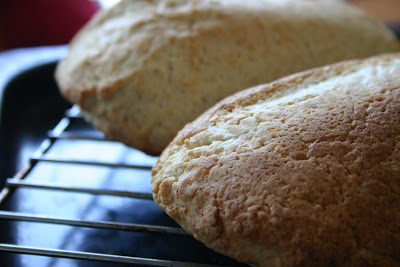
So I've been experimenting with the traditional and updated versions of fa'apapa, and my mother is right, the modern stuff is easier on the palate. But I still think the old-fashioned fa'apapa is better for fa'ausi, which in truth, was the whole reason I was trying to make fa'apapa anyway. Feel free to try either version. They both taste good, but only the original fa'apapa can prevent mugging.
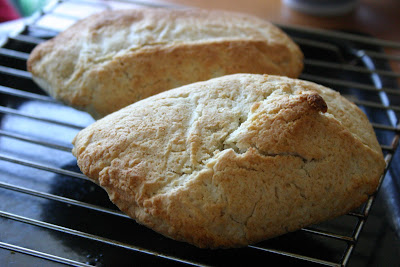
Old-school Fa'apapa (makes 2)
2 cups (250g) flour
⅓ cup (65g) sugar
1⅓ cup (120g) unsweetened coconut flakes
½ can (200ml) coconut milk
Put everything together in a bowl and mix well with your hands. Divide into two equal portions. Generously grease some baking paper with butter. Flatten each portion of dough into a slab no bigger than 1 inch/2.5 thick. Wrap each portion tightly in the baking paper. Bake at 390°F/200ºC for 35-40 minutes or until crust is well-browned.


If you get a chance, check out this video of fa'apapa straight from the umu!
http://panipopos.blogspot.com/
So the other day, my mother called me "old school".
She didn't use those exact words but the implication was clear. I've been away too long.
How did this happen?
Well, I was telling her how I was making fa'apapa, the way we used to have it when I was little. Fa'apapa in those days were these heavy, thick, dense coconut slabs that you could break your teeth on. An old Samoan woman could keep this kind of fa'apapa in her bag and nibble a lump off while waiting for the bus, sitting in church, in the doctor's waiting room. And the fa'apapa also doubled as a weapon in case she got mugged. One hit, and the guy would be out like a light.

So I was telling my mother how I had succeeded in recreating the same kind of hard crunchy crust around a dense coconut texture, weighing the requisite one pound, and the woman says "Oh, we don't make them like that anymore".
"What? What do you mean?" I ask her.
"Yeah, these days, we like lighter, fluffier fa'apapa." my mother replies.
"Huh? What are you talking about, 'lighter' 'fluffier'? They're supposed to be bricks of coconut right?"
"No, that's how they used to make them. Some people still make it that way (eg. my old-school daughter). But these days, we add baking powder to give it a bit of lift and don't add so much coconut. It tastes better too."
Well, I'll be darned. Who would have thought that fa'apapa would evolve without me.

So I've been experimenting with the traditional and updated versions of fa'apapa, and my mother is right, the modern stuff is easier on the palate. But I still think the old-fashioned fa'apapa is better for fa'ausi, which in truth, was the whole reason I was trying to make fa'apapa anyway. Feel free to try either version. They both taste good, but only the original fa'apapa can prevent mugging.

Old-school Fa'apapa (makes 2)
2 cups (250g) flour
⅓ cup (65g) sugar
1⅓ cup (120g) unsweetened coconut flakes
½ can (200ml) coconut milk
Put everything together in a bowl and mix well with your hands. Divide into two equal portions. Generously grease some baking paper with butter. Flatten each portion of dough into a slab no bigger than 1 inch/2.5 thick. Wrap each portion tightly in the baking paper. Bake at 390°F/200ºC for 35-40 minutes or until crust is well-browned.


If you get a chance, check out this video of fa'apapa straight from the umu!
http://panipopos.blogspot.com/
Monday, February 7, 2011
Oka I'a Video
By panipopos


And thank you to all you readers that support and encourage this blog.
Here is the video for making oka i 'a. Enjoy!
http://panipopos.blogspot.com/
I really appreciate every email or comment I get, especially from people who have tried the recipes on this blog. Vali from Hawai'i wrote that her and her sister made keke pua'a and panipopo all in one weekend! She even sent photos which had me salivating at the computer. Check out Vali's baking:

She writes:
It was an amazing weekend of fun, baking,Vali, you made me miss all those times I cooked with my sisters.
bonding and great memories created.
Thank you for sharing.
And thank you to all you readers that support and encourage this blog.
Here is the video for making oka i 'a. Enjoy!
http://panipopos.blogspot.com/
Saturday, January 29, 2011
Oka I'a - Fish Salad
By panipopos
Fijian 'kokoda', Tahitian 'poisson cru', and Hawaiian 'poke' are all delicious variations of the same dish. The Samoan version is oka i'a.
 Everything about this dish is according to personal taste, so you'd be hard-pressed to find two people that make it exactly the same.


What follows is a basic recipe, but I encourage you to make it your own. Don't limit yourself to fish. Try fresh mussels, scallops or crabmeat. Add whatever vegetables you like, although crisp and crunchy veges like celery and cucumber provide a nice contrast to the fish. My sister O likes to add a finely minced hot chili pepper for a bit of kick. Some people like to add fresh herbs, cilantro or parsley, and I've also seen oka with lemon slices floating in it. If you have any suggestions for how you put your own twist on oka i'a, I'd love to hear them.
½ cup (120ml) lemon or lime juice
¼ onion
2 spring onions
2 medium tomatoes
1 large or 2 small cucumbers
1 cup (240ml) coconut milk
salt to taste
Cut your fish into medium dice. Cover with lemon or lime juice and set aside for 1 minute to an hour. Yes, you read that right - 1 minute. My mother doesn't even marinate the fish in the lemon juice, just throws everything together. So it's completely up to you how raw you want your fish. The longer you leave the fish in the citrus acid, the more it's 'cooked' and the texture will be firmer than soft, raw fish. But you will also lose some of the clean, fresh flavour of newly-caught fish.


Everything about this dish is according to personal taste, so you'd be hard-pressed to find two people that make it exactly the same. 
However, three elements are common across all recipes. Firstly, you need fresh seafood, emphasis on FRESH. How fresh? Well, preferably the specimen you use was swimming in the ocean the same morning of the day you're going to cook. Frozen, canned or any other kind of preserved seafood will just not work for this recipe.

Secondly, you need citrus juice, the acid that flavours and 'cooks' the fish. Samoans commonly use lime or lemon juice. (In South American ceviche, some people use bitter orange, so if you're feeling creative or want to get in touch with your South American side, why not give it a go?) The third element of oka i'a is a selection of vegetables or even just one. If you simply add onions and nothing else, that's still oka.
What follows is a basic recipe, but I encourage you to make it your own. Don't limit yourself to fish. Try fresh mussels, scallops or crabmeat. Add whatever vegetables you like, although crisp and crunchy veges like celery and cucumber provide a nice contrast to the fish. My sister O likes to add a finely minced hot chili pepper for a bit of kick. Some people like to add fresh herbs, cilantro or parsley, and I've also seen oka with lemon slices floating in it. If you have any suggestions for how you put your own twist on oka i'a, I'd love to hear them.
Oka I'a (serves 4)
1 pound (500g) fresh tuna or snapper½ cup (120ml) lemon or lime juice
¼ onion
2 spring onions
2 medium tomatoes
1 large or 2 small cucumbers
1 cup (240ml) coconut milk
salt to taste
Cut your fish into medium dice. Cover with lemon or lime juice and set aside for 1 minute to an hour. Yes, you read that right - 1 minute. My mother doesn't even marinate the fish in the lemon juice, just throws everything together. So it's completely up to you how raw you want your fish. The longer you leave the fish in the citrus acid, the more it's 'cooked' and the texture will be firmer than soft, raw fish. But you will also lose some of the clean, fresh flavour of newly-caught fish.

I marinate the fish for as long as it takes me cut up the vegetables. So this is the next step. Finely dice your onion, slice the spring onion, dice your tomatoes and chop up your cucumber. Everything should be bite-size or smaller.

Drain your fish and discard the lemon or lime juice. Add the vegetables and coconut milk to the fish. Mix well, then season with salt to taste. Refrigerate for at least half an hour to allow the flavours to blend and develop.

Don't worry if your oka looks thick, like it doesn't have much juice. As the oka sits in the refrigerator, liquid from the vegetables will seep out and mix with the coconut milk, and your salad will be juicy in no time.

Subscribe to:
Posts (Atom)